 VirtualCardx
Aven Card Review 2026: 6.49% APR Home Equity Visa
The short verdict
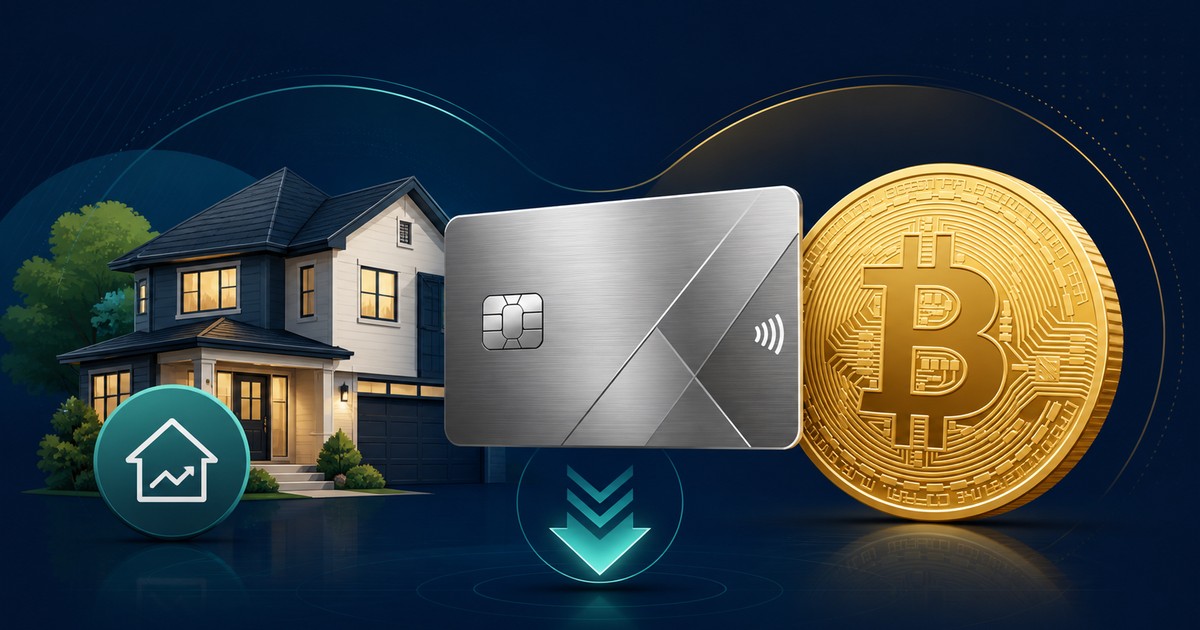
Aven does one thing differently from every other credit card issuer: it prices your credit like a secured loan. Back your card with home equity and you get a 6.49-14.99% APR Visa instead of the ~23% average US card rate. Back it with Bitcoin and you can borrow up to $1M from 8.99% APR without touching your house. The trade is obvious - collateral buys you a lower rate, and if you default, the collateral is what's at stake, not just your credit score. This review is based on Aven's site, legal disclosures, fee pages, and its Trustpilot profile; it is not lending advice.
Who issues it and why that matters
The operator is Aven Financial, Inc. (NMLS #2042345), founded 2019 in California. The actual Visa cards are issued by Coastal Community Bank, an FDIC member (NMLS #462289) licensed by Visa U.S.A. That three-layer chain - fintech front end, chartered bank issuer, card network - is the same structure behind most reputable US neobank cards, and it's the first thing we check before recommending anything in this space. Aven reports $3B+ funded across 250,000+ customers and carries a 4.9 Trustpilot score on 10,544 reviews, an unusually large sample for a product this young.
The five product lines
Home Equity Visa Card - the flagship. Limits to $400K, variable APR 6.49-14.99% (capped at 14.99%), unlimited 2% cash back, no annual fee. It behaves like a revolving credit card but is priced like a mortgage. There's a lowest-rate guarantee: if you opened or were formally offered a HELOC/HELOAN since January 2023 and Aven can't beat the APR, they pay you $250 (700+ FICO required).
Bitcoin Visa Card - the interesting one for crypto holders. Pledge BTC, borrow dollars, limits to $1,000,000. Fixed-term plans run up to 10 years from 8.99% APR; interest-only plans up to 5 years. You pick your loan-to-value: the site calculator shows 30% LTV at 8.99%, 50% at 9.99%, 70% at 11.99%. Custody is at BitGo Bank & Trust, a licensed institutional custodian, with an explicit no-rehypothecation pledge and proof of reserves.
Rewards Visa Card - the entry door if you have neither house nor BTC: 3% cash back on the first $10K per year, unlimited 2% after, 16g stainless steel physical card, zero annual/upfront/cancellation fees.
Home Equity Cash is a conventional HELOC that can close in as fast as 15 minutes, and Flexible Cash offers same-day cash without committing to a HELOC.
Cost math: four ways to borrow $20,000
- Average US credit card (~23% APR): roughly $4,600 in first-year interest, unsecured, and most limits won't stretch to $20K anyway.
- Traditional HELOC (8-12% typical in 2026): $1,600-2,400, but expect appraisal, notary, county recording, and weeks of process.
- Aven Home Equity Visa (10.74% midpoint): about $2,148, applied for on a phone in minutes, usable same day, with 2% cash back softening it further.
- Aven Bitcoin Visa (fixed from 8.99%): about $1,798, no property needed, but your BTC is locked in custody.
Aven deliberately prices itself between "half the cost of a regular card" and "roughly HELOC parity, but fast." The premium you pay over a slow, cheap HELOC buys speed and convenience; the lowest-rate guarantee is aimed squarely at rate shoppers who would otherwise walk.
Run the Bitcoin scenario once more: pledge $150K of BTC at 50% LTV and draw $75,000. If BTC gains 30% over a year, your LTV drifts down to ~38% and you can request a limit increase. If it drops 40%, LTV spikes to ~83%, you either post more collateral or partially pay down, or the position gets liquidated with a 2% liquidation fee at the platform's execution points. Collateralized borrowing is a volatility-tolerance question before it is a rate question.
Three fee traps to know before applying
Cash back is AutoPay-gated. The full 2 points per $1 requires enrolling in AutoPay within 25 days of opening and staying enrolled. Skip it and you earn 1.5 points - a 25% haircut on rewards for people who like manual payments.
Cash-outs and balance transfers cost 2.5% on the home-equity products (1% on the Bitcoin card, plus a 2% fee on full liquidations). Moving $20K out of your line costs $500 up front - effectively adding 2.5 points to your first-month rate.
County recording fees above $25K. If your line exceeds $25,000, recording costs are yours; Aven wraps them into a separate 12-month interest-free fixed plan. Check your statement so the surprise mini-loan doesn't confuse you.
Application walkthrough
Step one: enter your mobile number on aven.com for an offer - explicitly a soft pull that does not touch your score. Step two: only if the numbers work, proceed to the formal application, which is the hard pull. Step three: home-equity applicants get an algorithmic property valuation (usually no in-person appraisal); Bitcoin applicants transfer BTC into a BitGo custody address. Step four: the moment the account opens, flip on AutoPay to lock full cash back, then add the card to your wallets.
One FAQ item deserves emphasis: do not use a VPN during the Bitcoin Card application. Aven validates the application environment, and an anomalous IP can sink it - consistent with how seriously they run compliance.
Can non-US users get it?
Realistically, no. The phone-number gate, the US residency and credit-file requirements, and the property/BTC collateral stack make this a US-resident product end to end. Three groups should look closely: US homeowners carrying high-interest card debt (a 2.5% transfer fee into a 6.49% APR line versus 23% revolving is a genuinely large save); long-term BTC holders who want dollars without selling; and newcomers building US credit on the Rewards card. If what you actually hold is USDT rather than property, this product was never for you - our virtual card review series covers the USDT-funded alternatives.
Risk profile: the other edge of collateral
Miss payments on the Home Equity Visa and the worst case is foreclosure on the property - Aven markets a Foreclosure Protection Guarantee, but read its conditions rather than its name. On the Bitcoin card, a deep BTC drawdown triggers margin calls before liquidation. The variable APR also tracks the WSJ prime rate (6.75% as of January 2026), so your rate floats with the Fed cycle; fixed-term plans are the hedge when you expect hikes.
FAQ
Does checking my offer hurt my credit? No - the homepage offer check is a soft pull; only the formal application is a hard pull.
Does my limit grow if BTC rises? Yes, the FAQ confirms limits can increase with pledged BTC value; withdrawing the appreciation requires a new request.
Can rewards be paid in Bitcoin? No - cash only, per the FAQ.
Apple Pay / Google Pay? The card supports contactless payment; wallet support should be confirmed in-app.
BTC but no house? The Bitcoin Visa is built exactly for that path - US number and residency still required.
How it compares with rival borrowing routes
Exchange-backed BTC loans (Coinbase-style) run roughly 8-12% with small limits and floating terms, but keep everything inside one platform's risk. Brokerage margin loans price at 6-9% but accept securities, not Bitcoin. Aven's edge is form factor: the loan is a swiping Visa with up to 10-year fixed repayment schedules, which no exchange borrowing matches. On the home-equity side, plenty of fintechs have digitized HELOC origination, but packaging a HELOC as a credit card is currently Aven's alone, and the 10K+ Trustpilot review base is hard to match at this age.
Who should skip Aven
Anyone with unstable cash flow (the downside is an asset, not a score); active traders (locked BTC can't trade); anyone shopping purely for a rewards maximizer (3% caps at the first $10K); and anyone with no view on US rate direction - if you can't size the float risk, take the fixed-term plan or pass.
Verdict
Aven is the most complete execution of "collateral buys rate" in consumer credit today: licensed end to end, transparently priced (APR ranges, liquidation fees, and transfer fees all published up front - a standard most virtual-card platforms fail), and aimed at two well-defined audiences. If you're a US homeowner or a patient BTC holder, the math above is worth acting on. If you're outside that footprint, treat it as a benchmark for what transparent pricing looks like.