 VirtualCardx
WasabiCard Review 2026: 100K Users, Stablecoin Cards
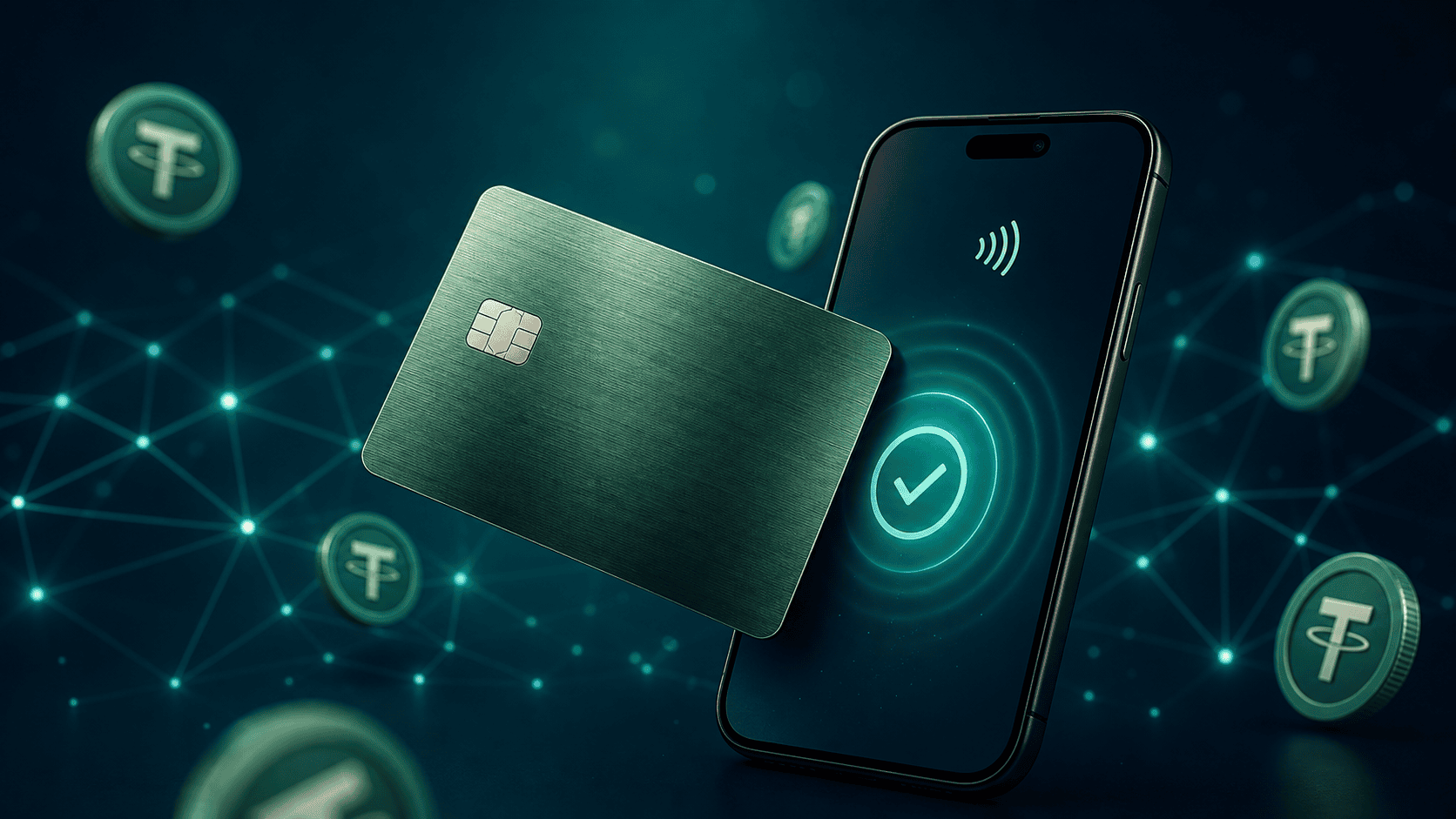
Conclusion in a nutshell:WasabiCard is one of the few platforms in the stablecoin virtual card space that offers ”dual-card support and full licensing”—its virtual cards support instant linking and use with Apple Pay, while physical cards enable cash withdrawals at ATMs worldwide. Backed by U.S. MSB/MTL and Canadian MSB licenses, as well as PCI DSS Level 1 certification, it’s ideal for users expanding overseas who want to actually spend stablecoins like USDT.
I. Platform Overview: A Leading Player in the Stablecoin Payments Sector
WasabiCard (official website: https://wasabicard.com) is a stablecoin payment platform targeting the global market, featuring a complete closed-loop system centered on ”stablecoin top-ups + virtual/physical card spending.” According to official data, the platform has over 100,000 registered users, processes an average of more than 5 million transactions per day, and has achieved a cumulative transaction volume exceeding $1B+ (US$1 billion), with services available in over 200 countries and regions.
In the rapidly evolving stablecoin card space, this scale already places it among the top tier. While many similar platforms are still stuck at the $1 million trading volume level, WasabiCard’s scale demonstrates that it has successfully established a complete workflow—from top-ups and card issuance to global settlement—and that its risk control and transaction systems have been tested by large-scale, real-world transactions. For users, the platform’s scale itself serves as a signal of trust—high trading volume implies more mature settlement channels, more stable card issuance capabilities, and faster customer service responses.
The process is quite simple: Register an account → Complete KYC identity verification → Top up your account with stablecoins like USDT (choose the blockchain with the lowest fees) → Activate the card → Link it to Apple Pay or enter the card number directly to make purchases. The entire process can be completed via the app or website; the virtual card is generated instantly, eliminating the need to wait for a physical card to be mailed—this is one of the key advantages of stablecoin cards over traditional bank virtual cards.
II. Card Types: Virtual Card + Physical Card (Dual-Card Configuration)
Virtual Card: Instant Apple Pay setup, $10,000 limit per card
The virtual card is WasabiCard’s flagship product, and its standout feature is support for instant Apple Pay setup: After activating the card, you can add it to your iPhone or Apple Watch and complete the setup in just a few seconds, allowing you to make purchases immediately at online and in-store merchants that accept Apple Pay. For users who frequently pay for overseas subscriptions, App Store charges, and ad fees on their phones, this ”activate and use immediately” experience is incredibly convenient.
The maximum balance per card is $10,000 USD, which is sufficient to cover the vast majority of e-commerce purchases, advertising campaigns, and subscription services. The card is accepted worldwide and allows users to view their balance and transaction history in real time. Users can top up the card only as needed, avoiding the need to keep large sums of money idle on the card. Virtual cards are ready to use immediately and do not require physical delivery time, making them the ideal first card for users expanding into international markets.
Real-world use cases
In practice, virtual cards are most commonly used for advertising payments and SaaS subscriptions: Advertising accounts for Facebook Ads, Google Ads, and TikTok Ads have very high requirements for card stability, and frequently switching cards can easily trigger risk controls; therefore, a long-term, stable virtual card is more suitable for advertising accounts than ”disposable” temporary cards. Overseas subscription services such as ChatGPT Plus, Notion, and Netflix often cannot process payments because they do not support domestic bank cards; using a stablecoin-backed virtual card allows for seamless payment. When traveling, virtual cards can also be used directly to book Airbnb accommodations, flights, and hotel reservations.
Physical Card: Global ATM Cash Withdrawals and Contactless Payments
In addition to virtual cards, WasabiCard also offers physical cards, addressing the pain point of ”how to convert stablecoins into cash.” The physical card supports global ATM cash withdrawals, allowing users to withdraw fiat cash directly from local ATMs while traveling or on business trips; it also supports contactless payments, enabling users to tap and go at merchants in Europe, the U.S., and other regions that accept contactless payments. The physical card and virtual card share the same account balance, allowing users to freely combine their usage based on the situation: use the virtual card for online purchases and the physical card for in-person cash withdrawals and payments.
III. Compliance and Security: Multiple Licenses + Endorsement by a Full-Spectrum Professional Institution
Compliance is one of WasabiCard’s most notable features. The platform holds U.S. MSB (Money Services Business) and MTL (Money Transmitter License) licenses, as well as a Canadian MSB license, and has achieved PCI DSS Level 1 certification—one of the highest levels of certification in the payment industry’s data security sector. As a Visa Program Manager, WasabiCard issues cards directly within the Visa network rather than relying on third-party card-issuing channels. This ensures greater stability in card issuance, more controllable compliance processes, and alignment with Visa PIF (Payment Institution Framework) requirements.
In terms of security, the platform partners with several well-known institutions: Safeheron provides digital asset custody; Elliptic handles on-chain transaction risk control and anti-money laundering monitoring; SlowMist provides security audits; Sumsub handles KYC/AML identity verification; and PwC provides audit and compliance consulting. From card issuance licenses and data security to asset custody and on-chain risk control, professional institutions are involved throughout the entire process. This represents a high standard among similar platforms and helps reduce the cost of trust for users.
Why is compliance so important? From 2024 to 2026, the virtual card industry underwent a significant shakeout, with many unlicensed platforms that relied on gray-market channels shutting down or disappearing, and cases of user funds being lost were not uncommon. In contrast, platforms holding official licenses must undergo continuous scrutiny by regulatory authorities and are bound by clear rules governing fund flows, anti-money laundering obligations, and user protection. For users looking to deposit real money into a platform, ”licensed operation” and ”partnerships with reputable institutions” largely determine the minimum level of fund security.
IV. Supported Blockchains and Cryptocurrencies: Multi-chain Deposits Reduce Friction Costs
WasabiCard supports top-ups via multiple major public blockchains, including BSC (BNB Smart Chain), Arbitrum, Avalanche, and TRON, with a focus on stablecoins such as USDT. The significance of multi-chain support lies in the fact that users can choose the chain with the lowest current network fees and the fastest transaction processing times for topping up. For example, USDT transfers on the TRON network are low-cost and fast, making it the default choice for many users; Gas fees on Arbitrum and Avalanche are also significantly lower than on the Ethereum mainnet. Essentially, the multi-chain design minimizes the ”friction costs” associated with deposits, which is a key factor in evaluating the user experience of a stablecoin platform—the more chains available, the greater the flexibility for users, and the more controllable the overall costs.
Please note that before making a deposit, you must verify which specific networks and cryptocurrencies the platform supports. Selecting the wrong chain may result in your assets not being credited or require additional fees to recover them. We recommend testing with a small amount first to ensure successful receipt before making a large deposit. Also, be mindful of confirmation times and network congestion on each chain; during peak hours, networks such as TRON and BSC may experience delays.
V. Other Features: Money Transfers, Cashback, and Business Accounts
In addition to card issuance and spending, WasabiCard offers a range of value-added features. Cross-border remittances support more than 7 currencies, allowing users to send money directly to overseas accounts through the platform—effectively integrating card issuance and remittances into a single account system; The cashback feature allows users to earn a certain percentage of cash back on everyday purchases, which can help offset transaction fees over the long term; Enterprise accounts are designed for teams that need to issue cards in bulk and manage employee expenses. They support API integration, enabling automated card issuance, balance inquiries, and transaction management, making them ideal for cross-border e-commerce teams and the finance departments of companies expanding overseas.
In terms of account management, the platform offers common features such as real-time balance inquiries, transaction history exports, and card freezing/unfreezing, allowing users to keep track of their funds at any time; if a suspicious transaction is detected, users can freeze their card immediately to minimize losses. For users who operate multiple stores or projects simultaneously, the multi-card management interface is intuitive and allows them to set separate spending limits for each card by project.
VI. Analysis of Strengths and Weaknesses
vantage
- A dual-card configuration featuring a virtual card and a physical card, covering both online spending and in-person cash withdrawals;
- Apple Pay sets up in seconds, maximizing the convenience of mobile payments—ready to use as soon as you activate your card;
- Full compliance with all required licenses: U.S. MSB/MTL, Canadian MSB, PCI DSS Level 1, Visa Program Manager;
- All security partners are well-known organizations in the industry (Safeheron, Elliptic, SlowMist, Sumsub, PwC), resulting in low trust costs;
- Multi-chain deposits (BSC/Arbitrum/Avalanche/TRON) reduce transaction fees, while transfers in 7+ cryptocurrencies and cashback on purchases make the account features even more comprehensive;
- With over 100,000 users and a daily transaction volume of over 5 million, the platform’s stability is backed by actual data.
drawbacks
- As a licensed platform, KYC identity verification is mandatory; we cannot accommodate users who request a ”KYC-free” option;
- The limit is $10,000 per card, so large single purchases (such as bulk reloads of large advertising budgets) may need to be split across multiple cards;
- Stablecoin cards rely on deposits of crypto assets, which presents a certain learning curve for users unfamiliar with cryptocurrency;
- Some countries or regions may not be covered by this service; we recommend checking local support availability before activating your card;
- Specific fees (card activation fee, top-up processing fee, exchange rate difference) are subject to the real-time information displayed on the platform’s webpage; we recommend carefully verifying these details before making large transactions.
VII. Overall Evaluation and Target Audience
Overall, WasabiCard is suitable for the following groups: cross-border e-commerce sellers who use virtual cards to pay for Facebook/Google ads, platform store rent, and overseas procurement costs; companies expanding overseas that use corporate accounts and APIs to manage team expenses and issue cards in bulk; international subscribers who use virtual cards to subscribe to services like ChatGPT, Notion, and Netflix; business travelers who use physical cards to withdraw cash from ATMs abroad and make contactless payments; and crypto users holding stablecoins such as USDT who want to ”put their coins to work.”
If your primary needs are compliance, stability, and a comprehensive payment solution with dual-card coverage for both online and offline transactions, WasabiCard is currently one of the options worth seriously considering; however, if you’re looking for a KYC-free solution or only need it for domestic spending, then it’s not the right choice for you. We recommend starting with a small top-up to test the service and confirming that the fees, limits, and processing speed meet your expectations before increasing your usage.
Overall Rating (out of 5): Variety of Card Types: 4.5 (Comprehensive coverage with both virtual and physical cards); Compliance and Security: 4.5 (Multiple licenses + partnerships with well-known institutions); User Experience: 4 (Seamless and instant Apple Pay setup, though the KYC process takes some time), Fee Transparency: 3.5 (Specific fees are subject to the platform’s real-time display). Overall, WasabiCard ranks as ”balanced to above average” in the stablecoin card space and is particularly suitable for users who prioritize compliance and stability.
VIII. Official Website Links
WasabiCard Official Website:https://wasabicard.com. For more comparisons and reviews of virtual card platforms, stay tuned for updates on this site.
[2026-09-13 Verification Confirmed] wasabicard.com was reachable on September 13, 2026 — the platform is operational. The homepage still advertises 100,000+ users, 5M+ daily transactions, $1B+ processed, 200+ countries, and the Elliptic/SlowMist/Sumsub/PwC partnerships; per-card balance limits and exact fees still require checking inside the platform, so the assessment above stands. >