 VirtualCardx
uu wallet U Card: Solid, but KYC Required Now
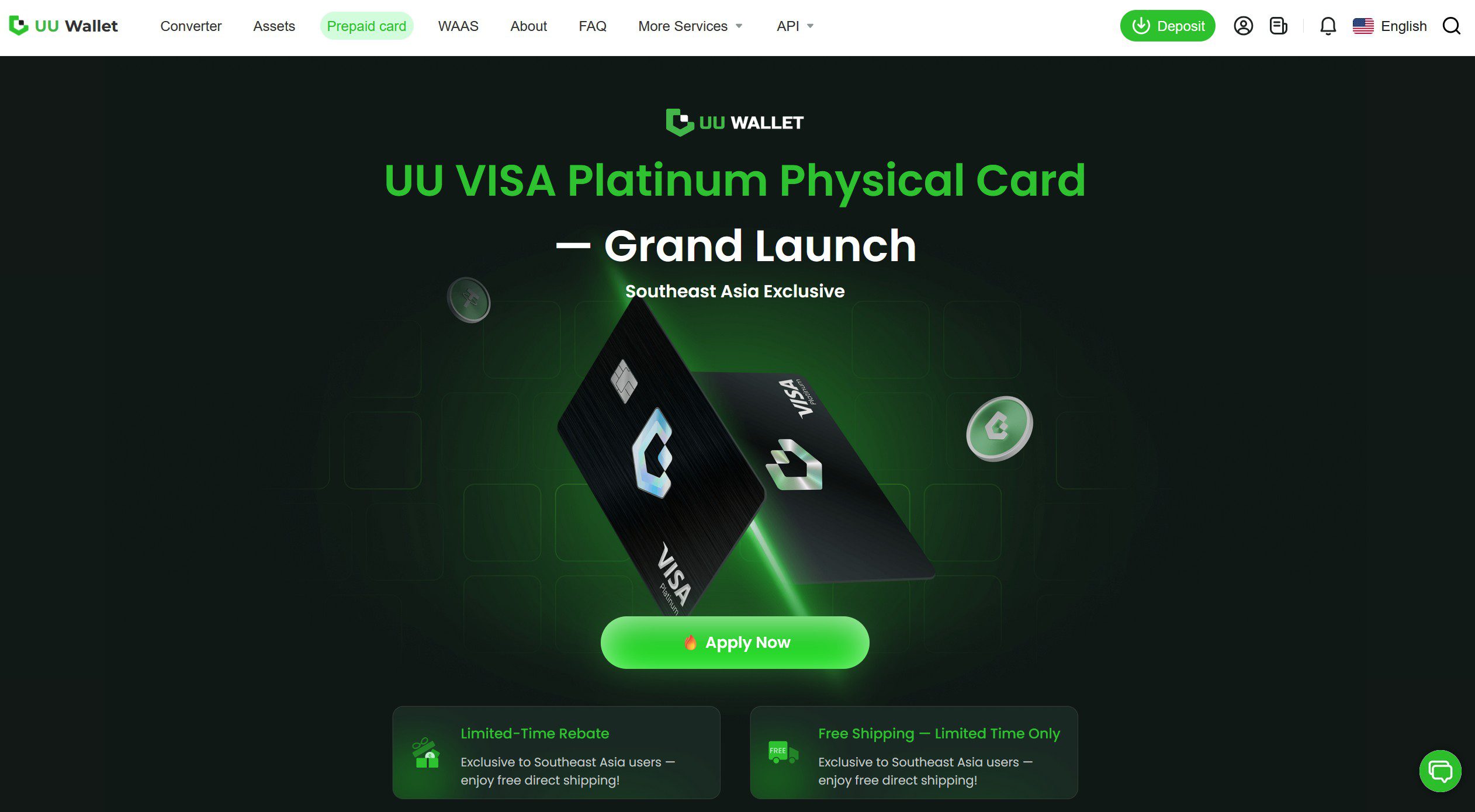
Verification update (2026-09-14): The official site is reachable and explicitly says card activation requires quick, secure KYC, so the historical no-KYC description is no longer suitable. It also mentions risk-asset identification and abnormal-transaction controls for withdrawals; no fixed, publicly verifiable issuance, funding, or withdrawal fee schedule was found. Its marketing reference to multi-jurisdiction FX licences does not list independently checkable entities, jurisdictions, and numbers, so this article does not present it as verified licensing.
Important: The material below is historical. Except where this update expressly says otherwise, exact claims about pricing, KYC, withdrawals, issuers, licences, BINs, and acceptance were not independently verified in this review and are not current service commitments. Test with a small amount and do not keep a long-term balance.
I. Main interface of the platform
It supports multi-language switching such as VN, EN, TH, etc. The core navigation contains homepage, activities, FAQ, about us, etc., and there is a LINE entrance; the promotion page of VISA Platinum Card displays the product rights and benefits, limited-time offers and application entrance, and the layout focuses on the advantages of convenient payment and global payment. It is mandatory to download the client from the official website to open the card (not very formal).
II. Timing of the establishment of the platform
Founded in 2022, the company initially focused on the Southeast Asian market and now has offices in Singapore, Hong Kong and Manila.
III. Card opening fees
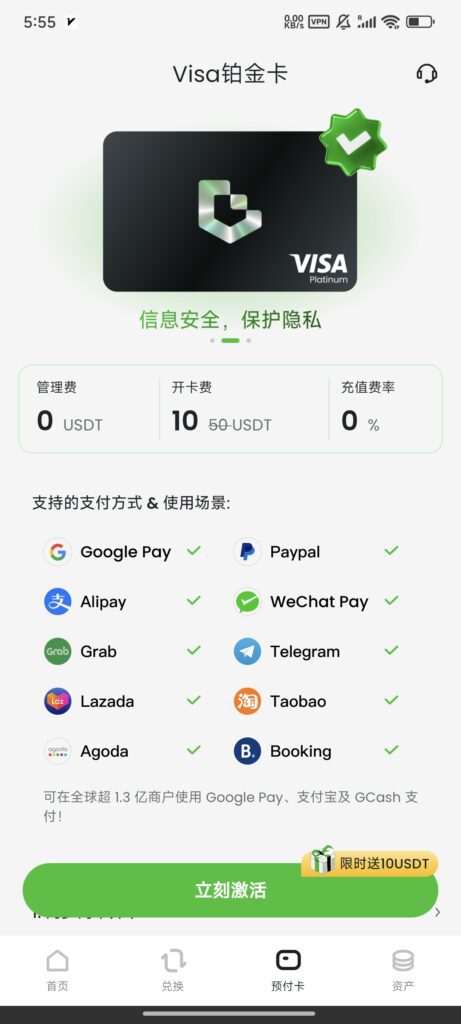
- UU Wallet VISA Platinum Card (for a limited time): $10 (regularly $50);
- Regular prepaid card: no fixed regular opening fee, adjusted with events.
IV. Top-up rates (consolidated)
Crypto assets (USDT, USDC, ETH, BTC, etc.) recharge and withdrawal rates of 0.5%-1% (limited time offer), seconds to the account, lower than the industry average.
V. Snap Heads (Applicable Scenarios)
- Reach: 160-176 countries and territories, 50 million + merchants;
- Online: e-commerce (Amazon, Lazada, etc.), streaming media (Netflix), cloud services, ad placement, Apple Pay/Google Pay/PayPal binding, etc;
- Offline: Restaurant chains, supermarkets, ATM cash withdrawals (some card types);
- Enterprises: WaaS services support foreign trade collection and cross-border settlement (e.g. Philippine foreign trade enterprises).
VI. KYC requirements
- Basic scenario: 3-minute simple identity verification;
- Large amount / high risk scenario: dynamic face recognition + blockchain address tracking, need to submit identity documents, proof of address, etc.
VII. Whether you need a cell phone number to register
Not explicitly mandatory.
VIII. Top-up method
Support USDT, USDC, ETH, BTC and other crypto assets recharge, get the exclusive address transfer to the account in seconds, no direct fiat recharge channels.
IX. Availability of physical cards
Virtual and physical cards (VISA/Mastercard prepaid cards, offline credit cards, ATM cash withdrawals) are available.
X. Characteristic highlights
- Zero threshold to apply, low opening price for a limited time + extra rewards;
- Global multi-scene coverage, support seamless payment online and offline;
- Charges arrive in seconds and rates are lower than the industry average;
- Bank-grade encryption + Intelligent Risk Control + Human Audit with full compliance license;
- Diversified product matrix including personal payment cards, cross-border remittance, and corporate WaaS services.
KYC-Free U Card – uu wallet: Average: Check These Points Before Reading
Policies regarding virtual credit cards, U-cards, and encrypted payment platforms change rapidly. Card issuance fees, top-up rates, KYC requirements, supported platforms, and risk control rules are all subject to change at short notice. Therefore, when reviewing information about these platforms, don’t just focus on individual fee figures; instead, verify whether the platform is still operating normally, whether it supports your specific payment needs, and whether you can withdraw or transfer funds from your account at any time.
If you plan to use this type of card to pay for ChatGPT, advertising accounts, cloud servers, overseas shopping subscriptions, or cross-border SaaS services, we recommend starting with a small amount to test it out. Once you’ve confirmed it works, gradually increase the amount you load onto the card. Avoid keeping a large balance on a single platform for an extended period right from the start—especially on platforms that lack a clear corporate entity, have slow customer service response times, or have received a lot of negative feedback from the community.
Items to Check Carefully
- KYC Requirements:Confirm whether it is completely KYC-free, has a low KYC threshold, or requires verification only after reaching a certain limit.
- Payment Methods:Check whether USDT, bank cards, Alipay, WeChat Pay, or other payment methods are supported, and calculate the actual loss incurred upon receipt of funds.
- Card Organizations and Card Series:The acceptance rates for Visa, Mastercard, prepaid cards, debit cards, and corporate cards vary significantly across different platforms.
- Consumer Scenarios:Make sure to verify whether the platform supports ad placement, AI subscriptions, international e-commerce, hotel and flight bookings, PayPal, or Apple Pay.
- Risk Control Rules:Familiarize yourself with the rules regarding account freezes, chargebacks, refunds, card cancellations, and balance withdrawals to avoid having your funds held up later.
Recommendations for Use
A safer approach is to have at least two alternative platforms ready: one for regular subscription payments, one for advertising or high-frequency transactions, and one as a temporary backup. This way, even if a platform undergoes temporary maintenance, a payment range is rejected, or fees are raised, it won’t affect ongoing business operations.
If a platform advertises “zero fees,” “permanent KYC exemption,” or “guaranteed approval in any scenario,” you should be even more cautious. Whether a virtual card can successfully process a payment typically depends on the issuing region, MCC, the merchant’s risk control measures, the billing address, the IP environment, and the transaction history—factors that no single platform can guarantee on its own.
Frequently Asked Questions
Are platforms that don't require KYC really better?Not necessarily. While waiving KYC requirements lowers the barrier to opening an account, it may also lead to issues such as low credit limits, strict risk controls, and slow customer service response times. It is suitable for small amounts, temporary needs, and situations requiring a high degree of privacy, but is not suitable for long-term storage of large sums of money.
Why can I use the same virtual card to make payments on some websites but not on others?Different merchants check the card range, billing address, IP address, device environment, and historical chargeback rate. Just because a card is valid doesn’t mean all platforms will accept it.
How can you reduce the likelihood of running into problems?First, check recent reviews, then make a small deposit to test the platform. Be sure to keep records of your transactions and screenshots of your communications with customer service, and avoid leaving a balance sitting in an unfamiliar platform for long periods of time.