FunPay Virtual Card Review: Fees, Stability & Use Cases
- Filed
- Virtual Card Reviews
- First run
- 2025-12-03
- Length
- 984 words
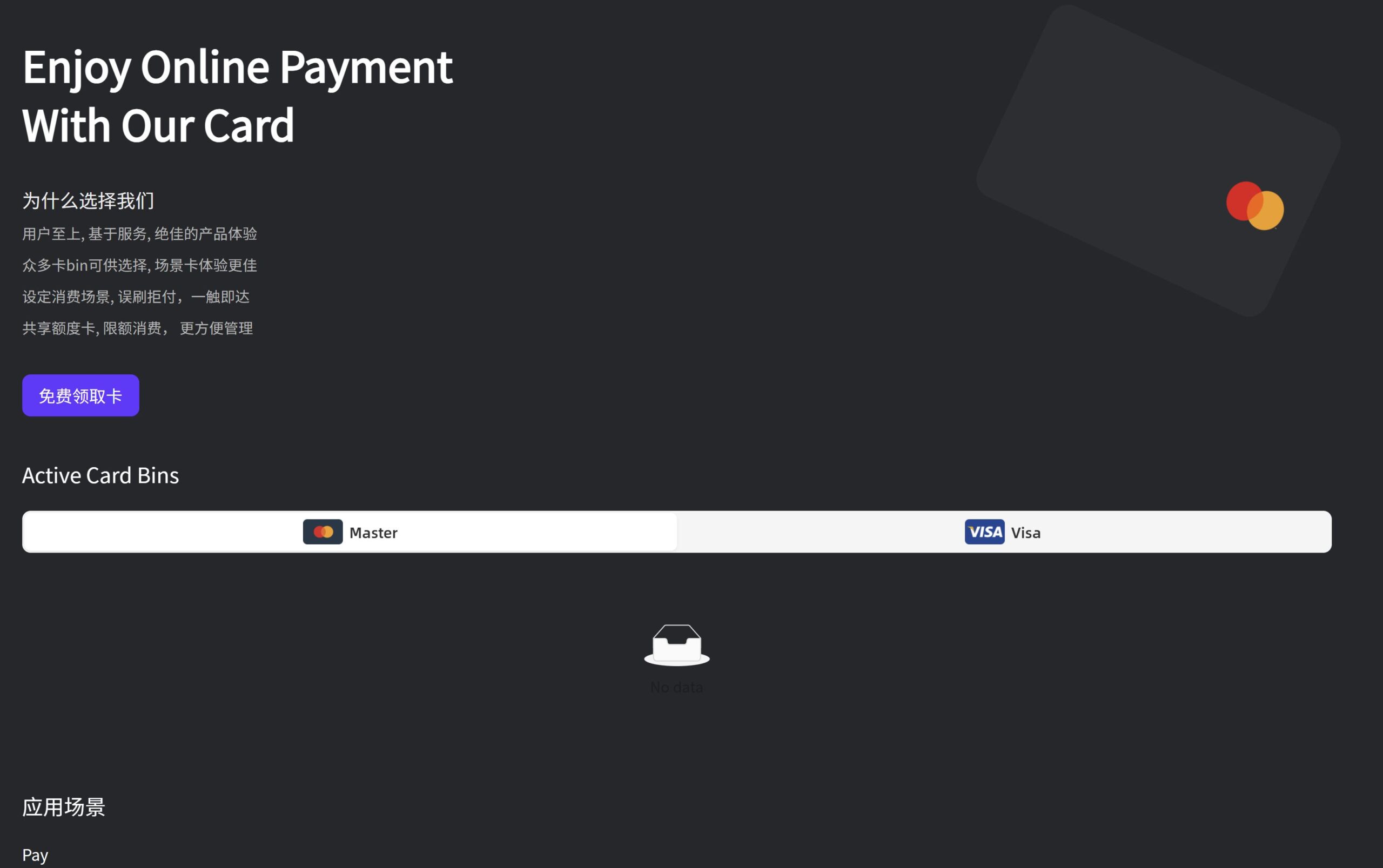
For users paying overseas from China, domestic cards fail on foreign platforms and the FX paperwork gets old fast. I recently tried FunPay (funpayfi.com), a virtual credit card platform, and this article breaks the experience down from a neutral angle: where it works, and where the risks sit, so you can judge whether it fits you.
I. Opening and using the card: a light process that covers mainstream overseas scenarios
FunPay's main draw is how light the card-opening and usage flow is:
- Quick signupRegistration asks only for a phone number or email plus basic details; no identity audit is required to log in, the platform provides a variety of card bin options such as Master, Visa, etc., and after selecting and recharging the card, you can generate the card number, expiration date, security code, and other complete card information, and the whole process of digitalized operation, you can complete the opening of the card within 10 minutes.
- Friendly top-upsThe card accepts Alipay, WeChat Pay and other payment methods common in China, so no separate FX conversion is needed; the card has no annual or monthly fee, and only a one-time card opening fee ($10, valid for 2 years) is charged, and the recharged amount is directly converted to the card balance, so the use of the funds is clear.
- Scenario suitability is fairThe payment success rate is high when binding mainstream overseas platforms such as ChatGPT, U.S. Apple ID, Google Ads, etc., and there are no common problems such as “unsupported region” and “debit failure”; the platform also provides the functions of “scene restriction” and “quota control”, which can manually set consumption scenes and single/cumulative limits. The platform also provides "Scenario Limit" and "Limit Control" functions, which allow you to manually set consumption scenarios and single/accumulative limits to avoid unintended consumption to a certain extent.
II. Risks to weigh: useful, but never a place to park money
As a non-banking virtual credit card platform, FunPay has some non-negligible risk points, which users need to focus on:
- Limitations of cardbin adaptationAlthough the platform is labeled as “many card bin options”, there are big differences in the scenarios adapted to different card bins, and some niche overseas platforms (e.g., some European video sites, niche subscription platforms) may have binding failures, and the customer service response time is slow (1-2 hours response), and the problem solving efficiency is limited.
- Security of funds without bank endorsementUnlike traditional bank credit cards, FunPay virtual card funds are not deposited in regulated bank accounts, and the platform's fund escrow mechanism is not clearly publicized, so in the event of operational problems on the platform, the balance on the user's card may face the risk of not being able to withdraw funds.
- There are implicit limitations to the usage scenariosSome users report that the card can trigger risk controls on high-frequency or large-amount transactions, leading to declined payments, and that the rules behind those controls are not transparent, which makes them hard to anticipate.
III. Sensible usage: top up what you need, keep balances low
Combined with real-world experience and risk analysis, there are a few core recommendations for users who intend to use FunPay:
- Top up on demand, don't hoard your balanceDo not top up a large amount of money at one time to save trouble. It is recommended to top up as much as you need according to your recent payment needs and replenish as needed after you run out of money, so as to avoid keeping a large amount of unused funds on your card;
- Small amount testing firstBefore binding to a new overseas platform, recharge a small amount of money to test whether the payment is successful, and then make a large amount of spending after confirming the suitability, so as to avoid wasting money due to the mismatch of the card bin;
- Retention of consumption vouchers: Take screenshots in time after each payment to save the consumption records, card number information, etc., which can be used as a proof of communication with the platform in case of abnormal debit, payment failure, and other problems;
- No reliance on a single platformFunPay is a “supplementary option” for overseas payment, not the only choice, and can be used as a backup for 1-2 similar compliant platforms to diversify the risk of funds.
Summary: fine for short-term needs, judge the value for yourself
FunPay virtual credit card can indeed solve some of the immediate needs of domestic users to pay overseas, especially the mainstream AI tool subscription, app store recharge and other scenarios, convenience and adaptability have certain advantages. However, it is not a “risk-free magic weapon”, the lack of bank endorsement, insufficient security of funds and other issues, determines that it is more suitable for short-term, small amount of overseas payment needs of users.
If your demand is for high-frequency, large-amount overseas payments, it is recommended to prioritize cross-border credit cards issued by banks; if you only occasionally solve the payment problems of niche overseas platforms, FunPay can be used as a temporary option, but make sure to keep in mind the principle of “recharging according to need and rational use” to avoid financial losses due to over-trust of the platform.