 VirtualCardx
OkiCard Review: USDT Card, Apple Pay, Check KYC
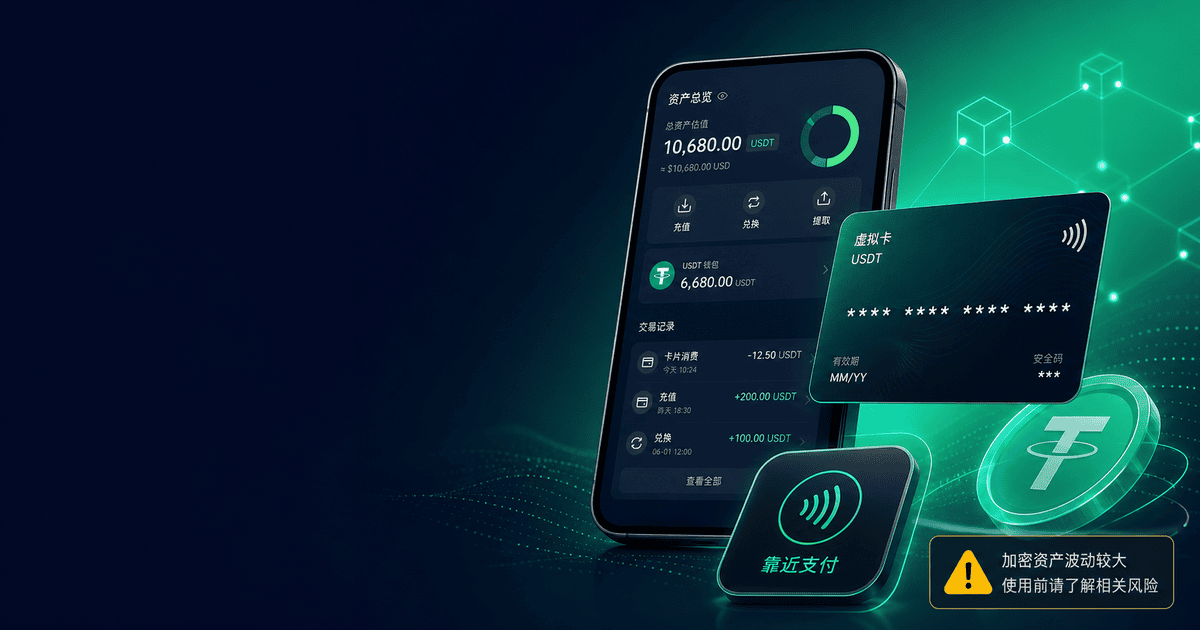
OkiCard With its slogan “USDT crypto card, no KYC,” its positioning is clear: to allow users to treat USDT as a balance for everyday spending, without going through traditional bank accounts or first withdrawing the cryptocurrency to an exchange to convert it into fiat currency.
Verification update (2026-09-15):The site https://okicard.com was reachable on 2026-09-15. Its 2026-03-02 terms describe a crypto-funded prepaid debit-card service, not a bank; loaded funds are generally non-refundable and access may be suspended for compliance/risk reasons. Confirm no-KYC status, wallets, networks, prices and availability in the current order flow; this article is not a guarantee.
According to information published on its official website, OkiCard supports multi-chain USDT top-ups, including BSC, ERC-20, TRC-20, and Solana SPL. It also promotes instant virtual card issuance, no identity verification required, and the ability to add cards to Apple Pay and Google Pay, covering over 40 million merchants. For those who frequently use USDT to pay for overseas subscriptions, there is a clear demand for this type of service. However, the stability and risk management protocols of “KYC-free” platforms must be evaluated on a case-by-case basis.
What is OkiCard?
OkiCard is neither an exchange nor a platform for selling cryptocurrency. According to its official website, it is a “card issuer / payment processor”: Users first obtain a virtual card, then top up the card with their existing USDT. When making a purchase, the system automatically converts the cryptocurrency into fiat currency for payment.
This method is suitable for users who already hold USDT. If you still need to buy cryptocurrency, you’ll need to do so through another exchange or wallet.
Core Features
- USDT Deposits:Supports networks such as BSC, ERC-20, TRC-20, and Solana SPL.
- No authentication required:The official website advertises "no ID verification" and "no KYC."
- Mobile Wallet:Promote support for Apple Pay and Google Pay.
- Use Cases:Online subscriptions, travel, coffee/everyday purchases, and overseas services that accept card payments.
- Issuance Rate:Page promoting "instant virtual issue."
How should I look at the costs?
OkiCard’s marketing focuses on “low on-chain costs” and “USDT multi-network support”—for example, on-chain fees are lower than those for ERC-20 when reloading via BSC or Solana. Other factors that truly impact the total cost include card issuance fees, reload fees, spending exchange rates, failed transaction handling, and refund processing times. Before placing an order, be sure to check the current pricing page—don’t just rely on the promotional claims on the blog page.
What situations is it suitable for?
- Pay for overseas subscriptions to ChatGPT, Claude, cloud servers, design tools, and more using USDT;
- I want to keep each subscription service separate from the main wallet;
- Mobile payment scenarios that require Apple Pay or Google Pay;
- I don't want to have to submit my full ID just for a small-denomination virtual card.
Risk Advisory
The biggest uncertainty surrounding OkiCard remains its “KYC-free + card network channels” model. With this type of product, certain transactions may fail due to issuing banks, regional compliance requirements, or merchant risk controls. Claims on the official website such as “zero blocking risk” should be taken with a grain of salt; in the real world, no virtual card can guarantee that all merchants will never decline a transaction.
- For your first time, top up only a small amount to test whether the merchant you're targeting accepts it;
- Do not keep your main wallet linked to or exposed on unfamiliar platforms for extended periods;
- Avoid using this in gray-area, high-risk, or non-compliant scenarios;
- Keep records of your top-ups and screenshots of your transactions so you can easily communicate with us if any issues arise.
FAQ
Does OkiCard sell USDT?
The official website clearly states that it does not sell USDT. It offers cards and payment processing; users must obtain USDT on their own and then deposit it.
Is OkiCard completely anonymous?
The official website claims that no identity verification is required, but on-chain deposit addresses, merchant transactions, and device information may all leave traces. Think of it as a “low-threshold virtual card,” not as a tool that offers absolute anonymity.
Is it worth getting an OkiCard?
If you mainly use USDT to pay for overseas subscriptions, you can try it out with a small amount. If you need to make large, regular payments over the long term, we recommend having a compliant KYC-verified card on hand as a backup.
Conclusion:OkiCard’s strengths include its clear use cases for USDT, convenient cross-chain top-ups, and attractive mobile wallet support. Its weakness is that there isn’t yet enough long-term feedback from the public; it is recommended to use it as a “test card” rather than a “primary card.”
Source:OkiCard USDT Card PageThe