 VirtualCardx
DeerPay Web3 Payment Platform: Full Hands-On Review
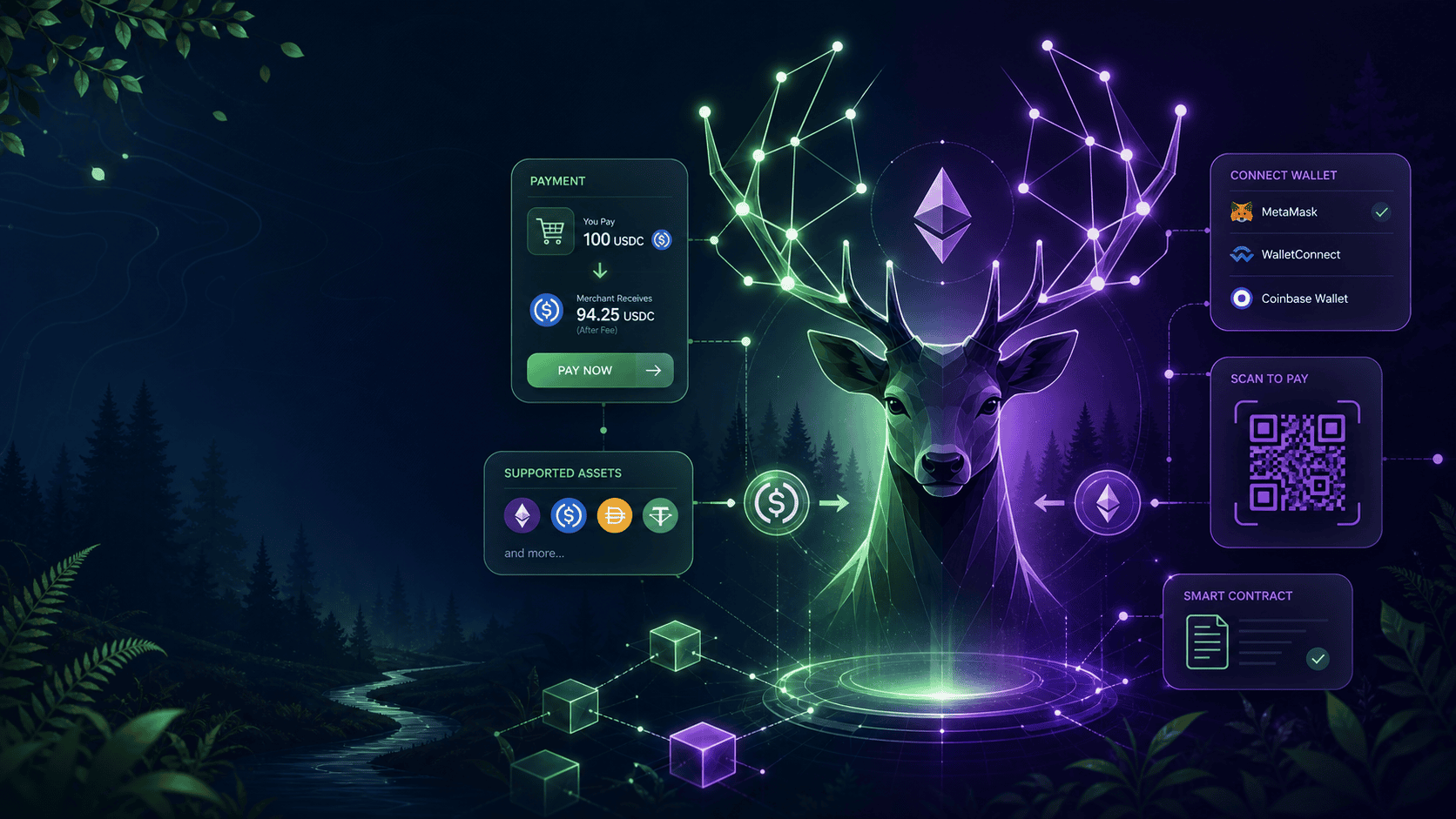
DeerPay Deep Dive: Subscribing to ChatGPT Plus with Crypto, Tested Hands-On
Last week I got a reader message through the VirtualCardX dashboard asking whether there's a payment solution that supports USDT top-ups and can directly subscribe to overseas SaaS tools. Honestly, this kind of request has become very common this year, especially after OpenAI shut down credit card payment channels in some regions. I spent a week testing DeerPay, a Web3 payment platform. This article shares my complete experience - account opening, funding, card binding, and real subscription tests.
What Is DeerPay?
DeerPay positions itself as the crypto payment infrastructure of the Web3 era. The core idea: convert your stablecoins (USDT/USDC, etc.) into a spendable virtual card. The biggest difference from traditional virtual cards is that you don't need to top it up with a credit card, and there's no KYC review (some card bins have spending limits) - just transfer on-chain and use it.
I looked into their product lineup, and there are currently several card types:
- Visa virtual card - 4-prefix bins, ideal for subscribing to AI tools like ChatGPT, Claude, and Midjourney
- Mastercard virtual card - 5-prefix bins, with better compatibility for Google Play and the App Store
- Business custom cards - for team bulk card issuance, with API support
My Hands-On Process
1. Sign-Up
Registration only needs an email - I used Gmail and the verification code arrived in about 30 seconds. The dashboard is clean, with a left sidebar covering top-up, card management, and transaction history. One detail worth mentioning: registration genuinely didn't ask for an ID or passport; the whole process took under 2 minutes.
2. Funding with USDT
I chose the Tron network (TRC20) for USDT because gas fees are low - about 1-2 USDT. The deposit address is auto-assigned by the system. I transferred 200 USDT from an exchange and it arrived in about 1 minute. After 1 on-chain confirmation, the balance shows up in the DeerPay dashboard - faster than I expected.
One thing to note: deposits below 10 USDT won't be credited automatically - you'd need to contact support for manual processing. My first test deposit was only 5 USDT and sure enough it got stuck; a support ticket took about 2 hours to resolve.
3. Issuing and Binding a Card
I issued a Visa virtual card for a 10 USDT issuance fee. With the card number, expiry, and CVV in hand, I went straight to OpenAI to bind it. Key point here: DeerPay lets you customize the billing address - I used a Delaware (tax-free state) address, and the binding went through on the first try with no 3D Secure challenge.
4. Real Spending Tests
I tested three main scenarios:
- ChatGPT Plus subscription - $20/month, charged successfully with no extra fees
- Claude Pro - $20/month, also passed on the first try
- Namecheap domain renewal - $12.98, success
- Binding to PayPal - failed with "this card is not supported" - be aware of this
ChatGPT Plus charges are settled in real time, and the transaction history shows the merchant as "OPENAI *SUBSCRIPTION". I haven't tested refunds yet since I'm still within the subscription period - I'll update this when I do.
Fee and Cost Comparison
I compared DeerPay against several mainstream alternatives:
- DeerPay: 10 USDT issuance fee, no top-up fee, no extra charge on spending
- NobePay: ~$2-5 issuance fee, but $1-2 monthly management fee
- Dupay: higher issuance fee (Premium card 20 USDT), but offers both USD/EUR currency options
- OneKey Card: free issuance but requires a 50 USDT first deposit, with ~1% spending fee
All things considered, if you're only subscribing to a few AI tools, DeerPay's per-card cost is manageable. The 10 USDT issuance fee looks pricier than NobePay, but NobePay's monthly fee adds up to $6-12 over six months - in the long run the difference is negligible.
What About Security?
The biggest fear with crypto payment platforms is an exit scam. I checked DeerPay's public info: card BINs are 539923 (Mastercard) and 473660 (Visa), and the issuing bank shows as a licensed European institution. Top-up funds don't go directly into their company wallet but are routed through smart contracts. None of this guarantees absolute safety, but at least there's a basic compliance framework.
My advice: don't deposit too much at once - top up what you need and keep a balance in the 100-200 USDT range. My largest single deposit so far was 500 USDT, and I refill only after spending. That way, even if something goes wrong, the loss is contained.
Who Shouldn't Use It?
A few scenarios where I don't think DeerPay covers the need:
- You need to bind PayPal or Wise - PayPal didn't work in my tests; these platforms' risk controls are sensitive to virtual cards
- You need large offline spending - this is a purely virtual card with no physical version; you can't swipe it at a POS terminal
- You want to top up directly in CNY - currently crypto-only; there's no fiat channel
- You need to pay domestic Chinese platforms - JD.com, Taobao, and similar domestic merchants aren't supported; the bins are overseas
Practical Tips and Summary
After a week of use, my overall impression of DeerPay: clear positioning, smooth experience, and well-suited to the specific scenario of subscribing to overseas digital services. I recommended it to three friends and none hit major issues - one friend's GitHub Copilot subscription was declined, but switching to a Mastercard bin fixed it.
If you're planning to try it, my advice:
- Keep your first deposit around 100 USDT; test a small subscription like ChatGPT or Claude first, then scale up once it works
- Issue both a Visa and a Mastercard - different merchants have different bin compatibility, and two cards cover 95%+ of scenarios
- Use a US tax-free state for the billing address (Delaware, Montana, New Hampshire, Oregon) to avoid sales tax
- Keep monthly spending per card under $500; large transactions tend to trigger risk controls
- Before big deposits, test on-chain arrival speed with a small amount (e.g., 5 USDT) to confirm everything works
The Web3 payments space will only get hotter this year. I'll keep tracking DeerPay's updates and review more similar platforms. If you're using other virtual card solutions, feel free to share your experience in the comments on VirtualCardX - I'll compile a comparison table and update everyone.
Status check — September 2026
This review could not verify an operating official DeerPay site or public terms, and deerpay.com and deerpay.io did not return a usable response. Current operation, fees, KYC, issuer and licensing status therefore cannot be confirmed. Features and test descriptions below are historical only and must not be used as a basis for onboarding, funding or providing identity documents. If a new entry point appears, first verify the operating entity, official notice, agreement and regulatory registration.